

AI Tutor Assistance
AI tutor assistance is a feature within a Learning Experience Platform that uses natural language processing to provide real-time, personalized guidance to learners. Unlike traditional Learning Management Systems (LMS) that simply track completion, an AI tutor actively engages with the user to clarify concepts and troubleshoot errors. For small business teams, this capability is critical because it reduces the dependency on managers for every minor question. When an employee encounters a complex Excel formula or a leadership scenario, the AI tutor provides immediate context. This immediate feedback loop keeps the learner in a state of flow rather than frustration.
The Role of Natural Language Processing
Natural language processing (NLP) is the technology that allows software to understand and interpret human language. In the context of corporate training, NLP enables the AI to parse specific questions about course material. The system does not just search for keywords; it understands the intent behind the query. For example, if a user asks why a pivot table is not updating, the AI can diagnose the data structure issue. This level of granularity is what separates a modern LXP from a legacy video library. GoSkills integrates this technology to ensure that the AI tutor remains aligned with the specific curriculum being taught. For additional details, review the Online Business Courses LMS.
Personalized Learning Paths
Between Lesson Support
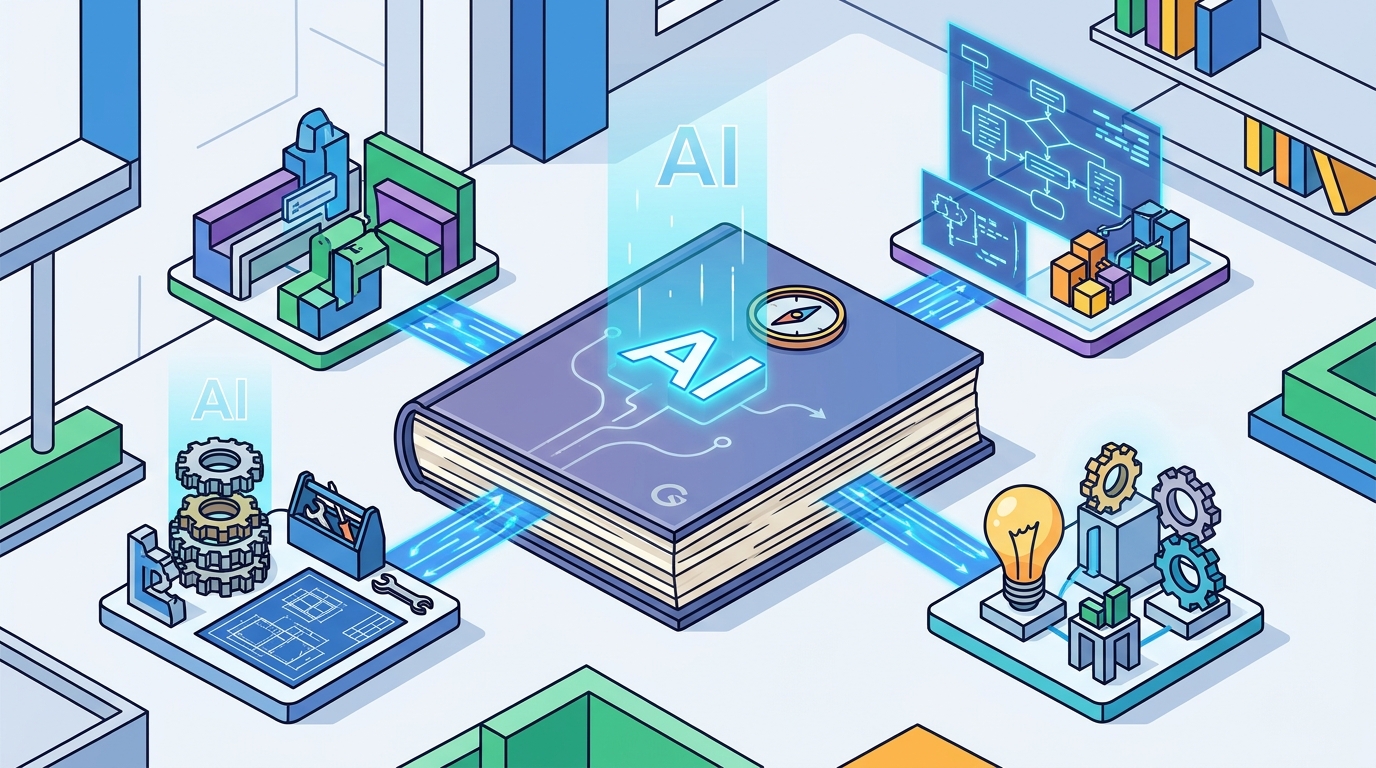
Between lesson support refers to the availability of learning resources and guidance outside of the structured video or module timeline. Traditional e-learning often leaves users stranded after a lesson ends, forcing them to rely on memory or external search engines. An AI tutor provides a continuous safety net that is accessible at any time. This support is particularly valuable for small business teams where dedicated training staff may not be available 24/7. The AI acts as an on-demand expert, ensuring that knowledge retention is maintained even when the formal lesson is complete. For additional details, review the .
Bridging the Knowledge Gap
Reducing Cognitive Load
Cognitive load is the total amount of mental effort being used in working memory. High cognitive load can lead to burnout and reduced retention. By providing between lesson support, the AI tutor reduces the cognitive load associated with problem-solving. The user does not have to remember every detail from the previous lesson to solve a new problem. Instead, they can consult the AI for specific details or procedures. This offloading of memory tasks allows the employee to focus on higher-order thinking and strategic application. It makes the learning experience less stressful and more sustainable over time. For additional details, review the Customer Experience.
Comparison of Support Models
| Feature | Traditional LMS | AI-Powered LXP (GoSkills) |
|---|---|---|
| Response Time | Hours to days (via email/ticket) | Instant |
| Availability | Business hours only | 24/7 |
| Personalization | Static content | Adaptive and contextual |
| Cost per Query | High (staff time) | Low (automated) |
Key Takeaways
- AI tutor assistance provides real-time, personalized guidance that goes beyond static video content.
- Between lesson support ensures that employees can apply skills in real-world scenarios without waiting for new training.
- Natural language processing allows the AI to understand complex, context-specific questions from learners.
- Personalized learning paths adapt to individual performance, preventing boredom or frustration.
- Reducing cognitive load through on-demand support improves knowledge retention and reduces burnout.
- Small business teams benefit most from AI tutors because they lack dedicated 24/7 training staff.
- GoSkills offers an LXP that integrates AI-powered personalization with a library of business courses.
- Choosing an AI-enabled platform is essential for modernizing corporate training and improving ROI.
Frequently Asked Questions
What is an AI tutor in a learning platform?
How does between lesson support work?
Between lesson support allows employees to access the AI tutor at any time to ask questions about previously learned material or apply skills to current tasks.
Is GoSkills suitable for small business teams?
Yes, GoSkills is designed for teams of all sizes, offering scalable solutions that provide high-impact training without the overhead of large enterprise systems.
Can the AI tutor replace human trainers?
The AI tutor complements human trainers by handling routine questions and providing immediate support, allowing human trainers to focus on complex coaching and strategy.
What types of questions can the AI tutor answer?
The AI tutor can answer questions related to course content, troubleshooting specific tasks, and providing context for concepts covered in the lessons.
How does GoSkills ensure the accuracy of AI responses?
GoSkills aligns the AI tutor with its curated course content, ensuring that responses are relevant, accurate, and consistent with the learning objectives.
Do I need a separate LMS to use GoSkills?
GoSkills offers both an LMS and an LXP, allowing organizations to manage courses, progress, and compliance within a single integrated platform.
How long does it take to implement an AI-powered LXP?
Implementation time varies, but GoSkills is designed for ease of use, allowing teams to start learning and utilizing AI features quickly.
Conclusion
Selecting the right learning platform is a strategic decision that impacts your team's productivity and growth. For small business teams, the ability to access AI tutor assistance and between lesson support is a game-changer. It ensures that learning is continuous, practical, and supported by intelligent technology. GoSkills provides the infrastructure for this modern learning experience, combining a robust course library with AI-powered personalization. By leveraging these tools, you can empower your employees to reach their full potential. Explore the GoSkills platform to see how AI-driven learning can transform your team's capabilities.