

Personalized Learning Pathways
Personalized learning pathways are adaptive sequences of training modules tailored to an individual employee's role, skill gaps, and career goals. Traditional training often forces every employee to complete the same generic content, which leads to low engagement and wasted time. AI-first platforms solve this by analyzing user behavior and performance data to recommend the most relevant lessons. This approach transforms passive learners into active participants who feel their development is directly tied to their daily work.
The Role of AI in Content Recommendation
Artificial intelligence algorithms process vast amounts of learning data to identify patterns. When an employee completes a module on data analysis, the system can recommend advanced Excel functions or project management techniques. This dynamic adjustment ensures that the learning experience remains challenging yet achievable. For small teams, this automation is critical because it reduces the administrative burden on managers who would otherwise need to manually curate training lists for each team member.
Boosting Engagement and Retention
Engagement is the primary metric for successful corporate training. When content is personalized, employees are more likely to complete courses and apply new skills. GoSkills utilizes a microlearning approach, breaking down complex topics into short, digestible lessons. This format, combined with AI-driven recommendations, keeps learners motivated. The platform's Learning Experience Platform (LXP) interface is designed to look like a consumer streaming service, making it intuitive for employees to browse and select content that interests them.
LMS and LXP Solutions
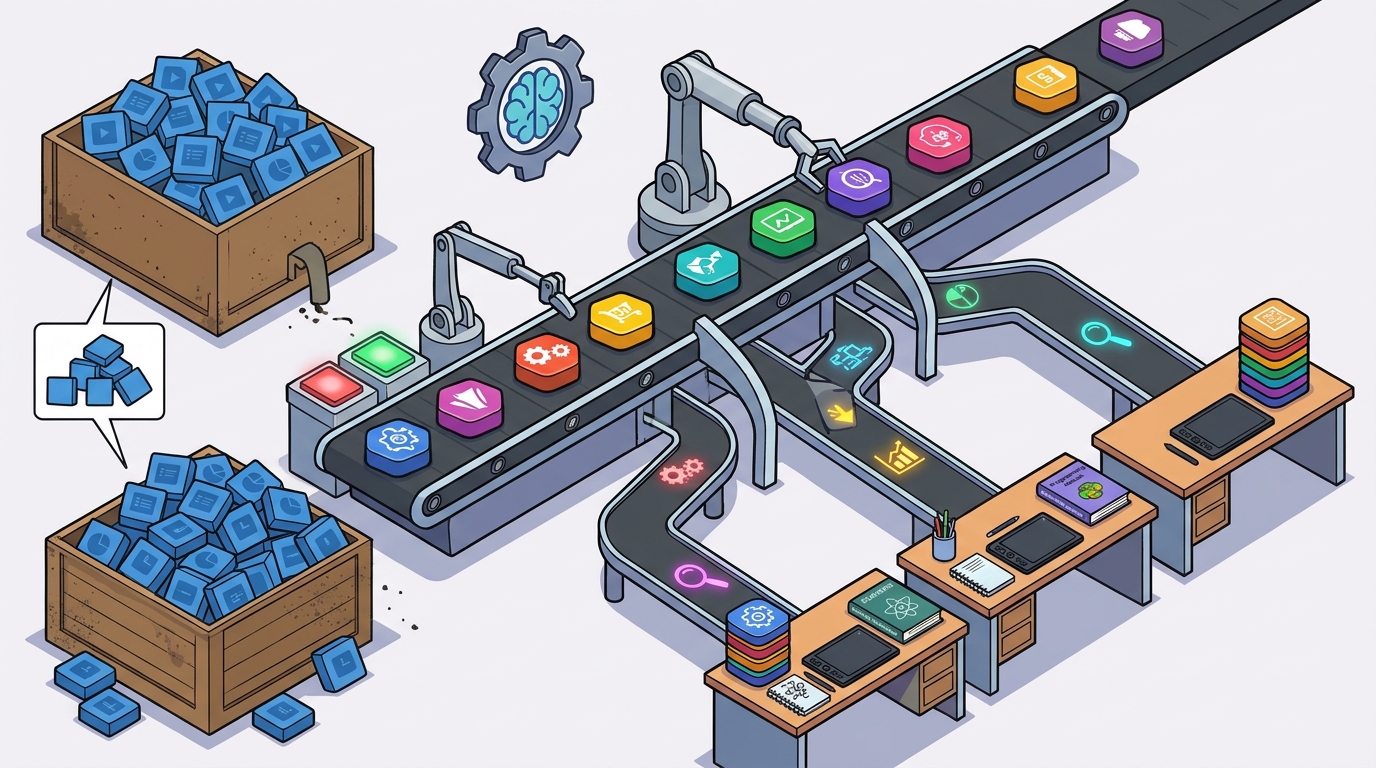
Understanding the difference between a Learning Management System (LMS) and a Learning Experience Platform (LXP) is essential for choosing the right tool. An LMS is a software platform used to create, deliver, and track training programs, focusing on administrative control and compliance. An LXP is a learner-centric platform that prioritizes user experience, discovery, and personalized content consumption. Many modern platforms, such as GoSkills, integrate both functionalities into a single ecosystem. This hybrid approach allows small teams to manage compliance requirements while still providing an engaging, self-directed learning environment.
Why Small Teams Need Integrated Solutions
Small businesses often lack dedicated Learning and Development (L&D) departments. They cannot afford to juggle multiple software tools for different aspects of training. An integrated LMS/LXP solution simplifies operations by providing a single dashboard for administrators and a unified interface for learners. This consolidation reduces the total cost of ownership and minimizes the learning curve for both staff and management. It ensures that data flows seamlessly between the administrative backend and the user-facing frontend.
Key Features to Look For
When evaluating AI-first platforms, look for specific features that enhance both management and learning. Administrators need robust reporting tools to track progress and identify skill gaps. Learners need a mobile-friendly interface and access to a diverse library of content. GoSkills offers a library of over 500 expert-led courses, covering topics from Microsoft Excel to leadership and AI. The platform also includes an AI-powered course builder, allowing teams to create custom content quickly without extensive technical skills.
Employee Onboarding Automation
Employee onboarding automation is the use of software to streamline the process of integrating new hires into an organization. Manual onboarding is time-consuming and often inconsistent, leading to a slow ramp-up period for new employees. AI-driven platforms can automate the assignment of training modules based on the new hire's role. This ensures that every employee receives the same core knowledge while allowing for personalized development tracks. Automation reduces the time spent by managers on repetitive tasks, allowing them to focus on mentoring and strategic guidance.
Streamlining the First 90 Days
The first 90 days are critical for employee retention and productivity. A structured onboarding program delivered through an AI-first platform can significantly improve these metrics. The system can automatically send reminders for pending courses and provide real-time feedback on quiz performance. This continuous support helps new hires feel supported and confident. For small teams, where every member plays a vital role, a smooth onboarding process is not just a nice-to-have but a business necessity.
Reducing Administrative Overhead
Administrative overhead is a significant challenge for small businesses. Manual tracking of onboarding tasks requires constant follow-up and documentation. An automated system handles these tasks in the background. Managers can view a dashboard that shows the completion status of each new hire's onboarding journey. This visibility allows for proactive intervention if a new employee is falling behind. The efficiency gained from automation allows small teams to scale their training efforts without increasing headcount.
Skills Mapping
Skills mapping is the process of identifying, documenting, and visualizing the skills required for various roles within an organization. It provides a clear picture of the current skill inventory and highlights gaps that need to be addressed. AI-first platforms use data analytics to automate skills mapping by analyzing job descriptions, performance reviews, and training completion records. This data-driven approach ensures that the skills map is accurate and up-to-date. It enables leaders to make informed decisions about hiring, training, and succession planning.
Identifying and Closing Skill Gaps
One of the primary benefits of skills mapping is the ability to identify skill gaps. By comparing the required skills for a role with the actual skills of the employees in that role, organizations can pinpoint areas where training is needed. AI algorithms can prioritize these gaps based on business impact and urgency. For example, if a team is transitioning to new software, the system can identify which employees need immediate training and which can wait. This targeted approach ensures that training resources are used efficiently.
Supporting Career Development
Skills mapping is not just about compliance; it is also a powerful tool for career development. Employees can see their current skills and the skills required for their desired career path. This transparency empowers them to take ownership of their professional growth. They can select courses that help them bridge the gap between their current role and their future goals. This sense of agency increases job satisfaction and retention. GoSkills supports this by providing clear learning paths that align with industry standards and career progression.
Comparison of AI-First Learning Platform Features
| Content Delivery | Static, one-size-fits-all | Personalized, adaptive pathways |
| Course Creation | Manual, time-intensive | AI-assisted, rapid generation |
| User Interface | Administrative focus | Learner-centric, consumer-like |
| Skills Mapping | Manual surveys | Automated data analytics |
| Onboarding | Checklist-based | Automated, role-specific workflows |
Key Takeaways
- AI-first platforms combine LMS administrative power with LXP user engagement to create a holistic training solution.
- Personalized learning pathways increase completion rates by tailoring content to individual roles and interests.
- Automation in onboarding reduces administrative burden and accelerates new hire productivity.
- Skills mapping provides a data-driven view of organizational capabilities and gaps.
- Small teams benefit most from integrated solutions that simplify management and reduce costs.
- Microlearning formats, such as short video lessons, are highly effective for busy professionals.
- GoSkills offers a comprehensive ecosystem including an AI course builder, LMS, and LXP for small businesses.
- Investing in AI-driven training tools is a strategic move to future-proof your workforce.
Frequently Asked Questions
What is the main difference between an LMS and an LXP?
An LMS focuses on managing and tracking training compliance, while an LXP focuses on the learner experience and personalized content discovery. Modern platforms often integrate both to provide a complete solution.
How does AI personalize learning pathways?
AI analyzes user behavior, quiz results, and role requirements to recommend specific courses. This ensures that employees receive content that is relevant to their current needs and future goals.
Is an AI-first platform suitable for small teams?
Yes, small teams benefit significantly from AI-first platforms because they automate administrative tasks and provide a ready-made library of content. This reduces the need for a dedicated L&D team.
Can small businesses create their own courses with AI?
Yes, platforms like GoSkills offer AI-powered course builders that allow users to generate custom lessons from existing documents or prompts. This makes it easy to create on-brand training content.
How long does it take to implement an AI learning platform?
Implementation can be quick, often within days, especially with platforms that offer pre-built course libraries and easy setup processes. The speed depends on the complexity of the organization's needs.
What are the benefits of skills mapping?
Skills mapping helps identify training gaps, supports career development, and aids in succession planning. It provides a clear view of the organization's talent capabilities.
Conclusion
For small teams seeking to enhance employee development, an AI-first learning platform is the ideal solution. By leveraging personalized learning pathways, integrated LMS and LXP features, automated onboarding, and skills mapping, organizations can build a skilled and engaged workforce. GoSkills provides a robust, all-in-one platform that addresses these needs with ease. To start your journey toward smarter training, explore the GoSkills LMS and see how AI can transform your team's learning experience.